Showing posts with label follow-up marketing. Show all posts

Friday, July 12, 2019

How to Grow Your Business with the Phone


One of the fastest ways to build your business is with the telephone.

Here's why. Unless you're selling something for under $100, you're going to need to talk to someone at some point before they write you a check.

And a great way to have more conversations is by calling prospects and clients. But not just any phone call will do.

Tip: Whenever you make a phone call, be useful to the other person. Never, ever call to "check in" or "loop back," or "touch base." No, no, no.

When you call prospects, give them news, tips and tools they can use to grow their business. Which, in turn, will grow yours.

To illustrate, within the last 48 hours, I've spoken to 6 current and prospective clients. Every one of them was happy to hear from me.

As a result, they're going to take future phone calls from me and more sales will result.

Why?

Because I gave them a news item and made it simple for them to insert it into their emails, web pages, etc., to make their marketing more timely. Which will make their marketing, better whether or not we ever work together on a project.

Something to think about.

One more thing …

If you found this idea helpful, claim your Free Client Cloning Kit at www.clientcloningsystems.com

Tuesday, April 26, 2016

Educational Marketing: Show, Tell, Teach, and Sell

Do you like visiting the dentist?

Me neither.

But something remarkable happened to me yesterday while getting my teeth cleaned. It could save my smile. And make you a few bucks, too.

Here's the story ...

I own a very spiffy Sonicare toothbrush that I almost never use. It takes too long, it's a bit irritating, a standard toothbrush is easier, blah blah blah.

So, yesterday, I'm sitting in the chair and Theresa, the hygienist, is sticking a probe into my gums. She's counting off numbers: "3, 3, 2, 3, 4, 4 ..." A 3 or below is good -- if she can stick the probe 3 millimeters or less into my gums, that means they are tight and healthy. Any 4s or 5s are bad -- that means my gums are weak and unhealthy.

I'm hearing way too many 4s.

Theresa says, "The good news is, your gums look better than they did 6 months ago. Do you floss?"

"Every day," I respond.

"Do you have a Sonicare toothbrush?"

"Yes."

"Do you use it?"

"Not much," I say.

"Well, you can get 30,000 brush strokes a minute with a Sonicare. The best you can do with a standard toothbrush is about 300 strokes. That's 100 times more brushing in the same amount of time. It removes way more plaque and bacteria, so your gums stay healthy."

That's when a 40-watt light bulb went off in my head.

"You mean I can be 100 times more efficient with a Sonicare?" I ask?

"Yes."

"Duh. Stupid. Okay, sign me up," I reply.

Now.

Was using a Sonicare toothbrush a good idea 6 months ago? Yes.

Did I buy into it then? No. I was too comfortable doing what I always did to make a change.

Was using a Sonicare toothbrush a good idea yesterday? Yes.

Did I buy into it? Yes.

Why? Because something clicked when I learned I could be 100 times more efficient. The gain of wiping out more bacteria with the same effort finally broke through the pain of changing my routine.

And here's the marketing moral of the story: While a small percentage of your prospects are ready to buy on their first contact with you, the vast majority are as stubborn, ignorant, and unwilling to make a change as I was about using an electric toothbrush.

Most of your prospects require ongoing, systematic contact to show them, tell them, and educate them -- at different times and in different ways -- until something clicks in their head. No amount of browbeating or scolding from you will make the sale. They must decide for themselves that you are the right choice.

The problem: You'll never know ahead of time what it is you say or do that causes prospects to buy.

The opportunity: If you keep educating prospects, you keep making more sales.

So ... what will you do about this?

One more thing: If you own a business, you can get a box of 11 Marketing Multipliers delivered to your door at no cost, if you hurry. Learn more at www.MarketingMultipliers.com

Thursday, September 5, 2013

The 30-Second, 6-Figure Marketing Idea

If your marketing depends on one-shot promotions, a sales letter mailed once, or a single email blast, it’s just like this little broom ... 


... and you will find it very difficult to sweep up profits.

By contrast, if your marketing has at least 3 steps built into every promotion -- if you "touch" every prospect at least 3 times with your sales letters, postcards, emails, or phone calls, it's just like this broom ... 


... and you will find it relatively easy to sweep up profits.

Idea: Stop with the one-shot promotions. Unless you enjoy drudgery and feast-or-famine when it comes to cash flow.

Instead, be systematic. Use multiple steps -- at least 3. And sweep up more profits in your business.

This idea is worth at least 6 figures to you ... but only if you use it.

And, if you want to put an end to "feast or famine" syndrome in your business, my free Client Cloning Kit can help. Grab your free copy now, while they last. 

Wednesday, May 29, 2013

How to Microwave Your Cold Prospects

What's a good way to get attention?

Be impossible to ignore.

What's a good way to quickly "warm up" cold prospects in your business and turn them into new clients?

Send them a message that's impossible to ignore.

Here's Exhibit A in my arsenal of tools to do just that -- a message in a bottle.


Twice in the last few weeks, I've mailed it to potential clients who once seemed eager to hire me, but had fallen silent.

Rather than send them email after email, hoping for a response, I spent a few minutes writing a relevant letter and shipped it out in a bottle like the one you see at left.

In both cases, response from those cold prospects came the same day -- "Let's talk!"

And the resulting revenue from both prospects was in the mid four figures.

Why does this work?

Lots of reasons:

  • Unlike an email, you canNOT delete a message in a bottle. You MUST open and read this
  • Big, lumpy mail like this canNOT go anywhere but the top of the pile. Therefore, it likely gets opened first ... by someone wearing a grin
  • Rather than claim to prospects that I can write sales letters that get opened and read, I prove it to them. In spades

So, yeah, this works. Four figures is a nice ROI on a bottle and postage that cost less than four bucks.

Now, you may not have access to the dozens of direct-mail tools at my disposal. After all, I am a professional copywriter. Getting my letters opened, read, and responded to is how I earn my living.

But you can adopt this same idea in your business. If you have leads with high potential value that have gone cold, spend a few minutes and dollars to send them a message they can't ignore.

Meanwhile, if you want to more clients like your best clients, my free Client Cloning Kit can help. Grab your free copy now, while they last. 

Wednesday, January 2, 2013

See and Sell - What Opportunties Are YOU Overlooking?

Do you own a wristwatch?

If so, you've probably looked at it hundreds of times, right?

It's always there, every day, right in front of your face.

Okay. Without looking, draw a quick picture of the watch face.
  • What color is it?
  • What kind of numbers -- Roman numerals or something else?
  • Is there a date? If so, where?
My prediction: You probably had a lot of trouble drawing your wristwatch.

Why?

Because there's a big difference between looking and seeing.

You may LOOK at your watch several times a day, but you probably don't SEE it in any detail.

Now. Just like a wristwatch on your hand, there are opportunities in your business -- right in front of your face. You may look at them every day, but do you see them?

Take time this week to really SEE what's going on in your business:
  • Are there prospects who dropped off the face of the earth last year who might still need what you're selling? Why not review your database and SEE for yourself?
  • Are there clients who've purchased once or twice from you, who would benefit from more? Why not email 3 clients and SEE for yourself?
  • Can you bundle two or more products/services together and offer them at a special price? Why not promote this new bundle on your web site or newsletter and SEE for yourself?
  • Etc. etc. etc.
If you're like most of the entrepreneurs I talk to each week, there are 3-5 big opportunities in your business staring you in the face, right now. Take time to look -- and SEE. You may be very happy at what you find.

Meanwhile ... if you want to put an end to "feast-or-famine" syndrome in your business, my free Client Cloning Kit can help you. Grab your copy here, while they last. 

Friday, October 26, 2012

Sales Made Easy For People Who Hate to Sell

There's an old adage in business: The more you tell, the more you sell.

But I found a better one: The more you help, the more you sell.

Or, simply, Help and Sell.

Specifically, the more you can deliver value to prospects before they've given you a nickel, the more nickels they will eventually give you ... along with lots of dimes and dollars.

This blog is an example. I don't get paid a nickel to share ideas here every week. But it brings me plenty of search engine love from Google, not to mention an interview on Fox News a few months back.

Another way to "help and sell" is to deliver real value when you follow up with prospects. Don't pester people with empty-headed emails to "check in" or "loop back and see how you're doing." Pheh.

Instead, your follow-up messages should give people ideas they can use to improve themselves and their businesses. (You do follow up, don't you? Good.)

Here's an example: Just last week, I sent the following email to a prospect, because I thought the article I mentioned would be of genuine help to him:

Have you had a chance to consider my ideas from last week about writing a promo piece for you? Please let me know when you get a chance!

Meanwhile, here's an Inc. magazine article that's relevant to our discussion -

http://www.inc.com/guides/2010/08/get-more-sales-from-existing-customers.html

... particularly numbers 6 and 7, which I can help you with on a monthly basis!

The result?

He called the next day to ask if he could hire me to help with number 7. "Sure," I said.

That's the whole point of marketing: To cause people to call or email and ask, "Can I hire you?"

So, this week, try to help more -- and see if you don't sell more.

Resource: If you want to put an end to "feast-or-famine" syndrome in your business, the free Client Cloning Kit can help. Grab your copy here. 


Friday, August 24, 2012

What's Behind All Great Marketing?

Ask any pro painter what the most important part of the job is and they'll answer with one word: preparation.

Do it right and the job goes smoothly. Do it wrong and you're looking at a disaster.

Which is counter-intuitive, right? After all, when you think of painting, you think of the results -- the color, shine, texture, etc. You don't see the preparation. Yet, it's the foundation of all great painting.

It's the same with your marketing.

When you think of marketing, you think of the results -- leads in your pipeline, emails or calls from hungry prospects, dollars in the bank, etc. You don't see the preparation. Yet, it's the foundation of all great marketing.

So, what makes for great marketing preparation?

Three things, at least. Here they are ...


1) Create a product or service that's better than your competitors' 

This is NOT a sexy idea for most marketers. At. All.

It's way more fun to get "creative" with ideas to find and get new clients than it is to ensure you're offering them an outstanding value for their dollar.

But: If your marketing is brilliant and your product/service is crap, you'll only implode faster as more people find out you're no good. Which is not what you want.

Take heart. You don't have to sell the BEST product or service in the world. Just be better than the other guys. Like the hiker putting on running shoes as a bear approaches him and his buddy, you don't have to outrun the bear -- you only have to outrun the other guy.


2) Choose a clear target

Joe Polish warns against what he calls "blind archery" -- shooting arrows randomly without knowing the target, hoping you will eventually hit something.

But most marketers don't have a clear target of their ideal prospects. As a result, they're a danger to themselves and their bank accounts.

You must choose your target before you fire your marketing arrows. And that entails preparatory thinking.


3) Set up a follow-up system

This is also NOT sexy. But essential.

By follow-up system, I mean what will you do to systematically touch all prospects until they buy or die?

Don't launch any marketing effort that doesn't have follow-up built into it. If you fail to follow up, you leave at least 50% of your cash on the table.

As I explain in the guide I created on Followup Marketing, I have never seen a follow-up system fail to pay for itself since 1996. In fact, I doubled sales -- twice -- for my first business by doing nothing more than using GoldMine to literally mine the gold from inbound emails and phone calls.

Bottom line: Doing the necessary prep work before you launch a marketing promotion is not always fun or exciting. Neither is flossing your teeth or wearing your seat belt. You can skip it. But don't complain about the outcome if you do.

Resource: If you want to put an end to "feast-or-famine" syndrome in your business, the free Client Cloning Kit can help. Grab your copy here. 

Monday, June 11, 2012

The Fortune is in the Follow Up

You're looking at a picture of the cleverest thank-you card I've ever received.

Look closely -- that's my business card on the left side. It got 100% of my attention, very fast :-)

This was mailed to me by Gary Leonard, a designer and advertising copywriter, from Leonard Creative. He sent it after he and I sat down for coffee to discuss how to send each other leads and cooperate on projects.

Gary used Send Out Cards to create and mail this thank-you card. On the cover is a photo he took of both our business cards; inside is a nice message from him.

Now. Anybody can say they're creative. But words without actions mean nothing.

Gary, however, proved he's creative by building and mailing me this card. That's something.

Beyond creativity, Gary proved he has the people skills to take care of any prospects or vendors I refer to him. That's important.

And beyond that, Gary is leveraging 80/20 Marketing principles by following up with the leads and potential joint-venture partners he already has.

Think about it: How often do you talk to or meet a prospect ... then fail to do anything strategic after the fact? More often than you'd care to admit, probably.

Smart people, like Gary, know that the fortune is in the follow up.

By putting your prospects through a structured system of follow-up marketing and nurturing -- which should include thank-you notes -- you can turn more leads into sales, automagically.

UPDATE: I later got these comments from Gary:
"I sent the thank you card to an attorney. She thought it was cool enough to give to the firm's marketing manager, who now wants an appointment with me. Not only is it a small sample of my creative work. It also has all of my contact information right on the front of it."

Bio: Kevin Donlin can help you grow your business and enjoy the breakthrough results your hard work deserves. If you're interested in boosting your revenues and profits, please click here.

Monday, April 23, 2012

Slow and Focused Marketing Wins


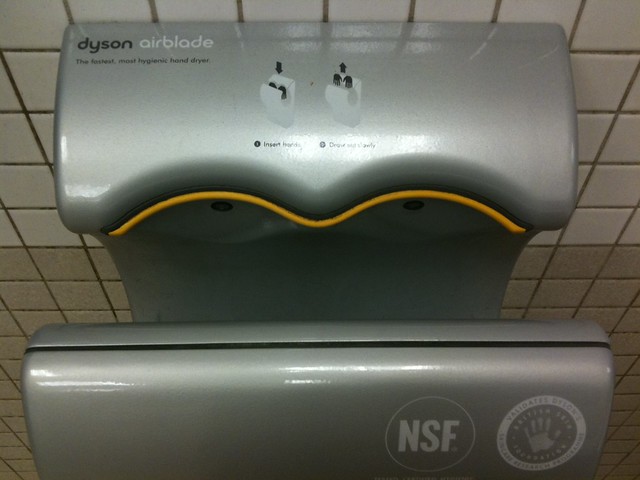
Ever use one of these Dyson Airblade hand dryers?

Even more striking than the design is the process.

Instead of "Rub hands vigorously under warm air," the process for traditional hand dryers (followed by the unwritten "Wipe hands on pants"), here's the process for a Dyson Airblade:

1. Insert hands
2. Draw out slowly

And how well does a Dyson work? Fantastically. By focusing warm air into a tiny sliver, the Dyson completely dries each part of your hand that passes through it.

Slow and focused beats vigorous and unfocused.


Now. What about your marketing? Could the same rules apply?

Think about what happens when a prospect comes into your business ...

Do you ask them qualifying questions, to gauge their interest and needs? Do you follow a script in the words you say or write to get the sale? And, most importantly, do you have a follow-up process to "touch" prospects at least 5-10 times after their initial contact with you?

In other words, is your marketing a slow and focused process?

Or ... do you wing it from start to finish -- sending emails and tweets, making phone calls, and following up whenever you have the time?

In other words, is your marketing a vigorous and unfocused mess?

Just like using a Dyson Airblade for the first time, it feels strange to put your prospects through a slow and focused process: qualifying questions, scripted presentations, disciplined/automated follow-up, etc.

But here's the good news: The "slow" method of drawing prospects through a focused marketing process will convert more of them into paying clients than a similar amount of vigorous, unfocused activity.

And you won't have to wipe your hands on your pants.

Bio: Kevin Donlin can help you grow your business and enjoy the breakthrough results your hard work deserves. If you're interested in boosting your revenues and profits, please click here.

Wednesday, March 7, 2012

The Sales Secret of Hungry Teenagers

A few weeks back, mysterious messages started appearing on the whiteboard in my office.

Like this one ...


And this one ...


As fast as I erased them, the messages came back.

Weird, right?

Not if you have teenagers, like me. You know exactly what I'm talking about -- tickets for The Hunger Games movie went on sale February 22. And the cast of Hunger Games is coming to MoA (the Mall of America) on March 9.

So ... what does this have to do with your business?

One word: Persistence.

My teenage daughter showed it in spades. Not only did she scribble reminders where I couldn't miss them, she mentioned The Hunger Games in just about every conversation, just about every day, from morning to night.

Result?

On February 22, I bought tickets to the movie premier. And last week, my daughter persuaded her friend's step-mom to drive 3 screaming girls to the Mall of America at 3:00 AM this Friday to wait in line to meet the cast.

Now THAT'S a sale.

Question: Do you display that level of persistence when following up with prospects who haven't bought yet? Do you follow up with them at all?

Think about it. What if you were as excited and persistent about selling your product or service as a teenager is about selling The Hunger Games?

You could turn your own personal economy around in 48 hours, that's what.

Persistence.

With it, you have nothing to worry about in business.

Without it, you will go hungry.


Bio: Kevin Donlin can help you grow your business and enjoy the breakthrough results your hard work deserves. If you're interested in boosting your revenues and profits, please click here.

Thursday, June 23, 2011

How to Take Online Conversations Off-line (with Cookies!)

Want to a build better business?

Take your online conversations off-line.

By that I mean do something tangible: meet for coffee (if local) or mail something (if distant).

Yes, Twitter, Facebook, and emails are nice, but those are relationship starters. Online "touches" have little value as relationship builders. Example: Would you tweet "Happy Birthday!" to your mom ... and leave it at that?

If you want to build a solid business relationship -- whether it's with a prospective client, vendor, or strategic partner -- do something tangible.

Here's how one person did it with me ...


I'm smart enough (I think) to know when I'm being bribed with a gift or a one-size-fits-all card.

But this is not one of those.

Because Dee took the time to include a nice note with her box of cookies. And her comments show that she did read my free Guaranteed Marketing report and the bi-weekly "Inside Marketing" newsletter that goes with it.

It may have taken her all of 10 minutes to read my materials, but that's 10 minutes more than most people spend.

Sending cookies doesn't hurt, either, but it's not necessary. And a gift may offend some people ... or get dunked in a bucket of water first, out of paranoia.

Bottom line: Be like Dee. Go all out to go off-line with your online conversations.

You'll find more ideas like these in my Free Report, Guaranteed Marketing.

Wednesday, March 16, 2011

Don't Market Anything Without This

Sales Obermeister Tom Hopkins has said that, if someone is a client or prospect of his, they will hear from him at least 6 times a year (in person, by mail, or by phone) with information that they find valuable.

How often do you follow up with prospects and, more importantly, with clients?

If your answer is "0" or "I don't know," here's an exercise -- write down last year's revenue for your small business.

Now double it.

That's about how much you could have earned if you had followed up at least 3 times with prospects (before the sale) and clients (after the sale), based on my experience doing it since 1998.

Lesson: Don't launch any marketing effort that doesn't have follow-up communications built into it.

Don't run an ad -- online or in print -- if you can't commit to following up at least 3 times with prospects who call your office, for example. If you fail to follow up, you leave at least 50% of your cash on the table.

So, in a nutshell, the bad news: If you ignore your prospects, they will ignore you.

The good news? If you pay attention to your prospects, they will pay you.

To learn more, check out the guide I created on Followup Marketing.

Monday, March 7, 2011

How Many Contacts Does it Take to Make a Sale?

If you handle the marketing for a small business, here's a sales tip: It takes 5.

Specifically, 80% of sales come after 5 or more contacts with prospects, according to most of what I've read and experienced in business since 1996.

So, if you contact a prospect 4 times or less, you are leaving 80% of your revenue on the table.

Yikes.

Now, here some numbers ...

According to Tony Rubleski:

48% of sales people never follow up with a prospect
25% of sales people make a second contact and stop
12% of sales people only make three contacts and stop
Only 10% of sales people make more than three contacts

Now here’s the case for following up with prospects:

2% of sales are made on the first contact
3% of sales are made on the second contact
5% of sales are made on the third contact
10% of sales are made on the fourth contact
80% of sales are made on the fifth to twelfth contact

Rubleski offers several excellent ideas about how to follow up, including:
Use an eletter.
One of the simplest, cost effective and smartest ways to stay in touch with customers, key prospects, and referral partners is to create and use an eletter in your marketing efforts. If it’s done consistently, you’ll have an incredibly powerful database built up that you can communicate with on a regular basis. We use ConstantContact for simplicity and cost and it has been wonderful. We shoot to get an eletter our every two-weeks and it always generates interest, business and comments each time we send it out.

Special Events.
A special client appreciation event is a very smart marketing strategy to engage, educate, update and thank top customers, referral partners and key prospects. People love to network, have fun and learn more. It’s also a great way to meet prospects in a fun, relaxed setting where your best customers are speaking highly of what you’ve done to help or improve their life.

To get you thinking and jog your creativity into action, here are a few events I’ve seen businesses use with great effectiveness:

*A local law office hosts an annual barbecue party by invitation only with hundreds of people showing up year after year

*Two mortgage brokers partner with a local nursery, send out postcards to their database for a free flower in the spring and a free pumpkin giveaway in October and have hundreds of people show up at each event

*A local financial advisor hosts a client appreciation luncheon with a guest speaker on a timely topic and fills a room with his best clients and several prospects invited as special guests

*A local restaurant has a one-week, “roll-back the menu” promotion by using 1976 prices for select dinners to celebrate their anniversary and every one of their locations is packed to the rafters with existing and new customers taking advantage of the deal
I've written before about how to follow up with prospects:
Get a good CRM like SalesForce or GoldMine. Then use it to organize your communications with prospects and clients. It can pay you back in about 2-3 days ... but only if you use it.

I have never seen this fail since 1996. Heck, I quickly doubled sales twice for my first business by doing nothing more than using GoldMine to literally mine the gold from inbound emails and phone calls.
To learn more, check out the guide I created on followup marketing.

Tuesday, February 8, 2011

Email Marketing in a Down Economy at The Mainstreet Chamber

I attended "Email Marketing in a Down Economy" today, a Mainstreet Chamber Lunch & Learn session with Jeff Ferrazzo from ConstantContact, at Buca Di Beppo in St. Paul.

Jeff spoke for an hour and answered a boat-load of questions from entrepreneurs and business owners in search of the latest, best tips on email marketing.

Most of Ferrazzo's talk focused on email newsletters: what they are, what they aren't, and how to use them to build your business -- even in today's tough economy.

I've been selling via email since 1994, when I marketed one of the first ebooks on Usenet (there was no Web). So email marketing is a topic I was eager to learn more about. And Ferrazzo didn't disappoint.

Here's a summary of his seminar, based on my notes ...

First, what is email marketing? A professional communication piece with reliable information, sent to an interested audience.

On average, it takes 7 "touches" to build enough trust with prospects for them to buy from you. An email newsletter allows you to automate this crucial follow-up process.

On the other hand, some people will buy immediately. Good new? Not entirely -- these customers are probably procrastinators who put off buying whatever it is you sell until they had no choice. They will likely do so again and buy from somebody else when their need is again too great to ignore -- unless you stay in touch until their next purchase.

Here are best practices for monthly email newsletters:

  • Use an easy-to-read template that's easy for you to update each week/month.
  • Reinforce your brand by matching the color scheme and fonts to your web site; include logos and other related items.
  • Manage your subscriber list carefully -- bounces, removals, and complaints.
  • Track opens, clicks, and delivery rates (to know what works and what doesn't)
  • Segment your list into prospects and buyers; send different messages and promotions that are relevant to each. For even greater results, segment your buyers and target them accordingly, to move them along the sales continuum.
  • Good open rates for an email newsletter range from about 25% to 35%
  • Never assume your customers know everything you sell. It's not their job to remember. Educate readers about your entire product line before they buy from a competitor.

Key #1: Build your list with permission
  • How? Ask people to sign up via your service/sales calls, email signature, in-store guest book, trade show booths, and every page on your web site (not just the home page -- you never know where Google will drop off a visitor to your site).
  • Maintain permission by remaining a trusted sender -- remind readers why they are getting your newsletter, offer a one-click unsubscribe button, and don't email too frequently.

Key #2: Set your objectives for promoting, informing, and relating to prospects/clients
  • Promote: offers, discounts, coupons, etc.
  • Inform: provide value, educate readers, offer research, etc.
  • Relate: acknowledge individual readers (a contest or client of the month can work well), offer "insider" specials

Key #3: Choose appropriate format and frequency
  • Tip: we may not read newsletters at the same time as our customers do ... but we are not our customers. Test and track to find your best delivery time for opens and clicks. Ferrazzo found, after much trial and error, that 8:00 Saturday morning was the sweet spot for sending out his email newsletter. (I tend to have good luck with Sunday morning.)
  • 60% of people say the "from" line is the main reason they open an email. Depending on which has a bigger reputation with your readers, use your name (Sally Smart) or your company's name (ZYX Technology) in the from line. 
  • Tip: try to use both names, to brand both (From: Sally Smith, ZYX Technology).
  • 30% of people say the subject is the main reason they open an email. You have 30-40 characters (5-8 words) to work with. Telegraph an immediate benefit readers will get from opening. 
  • Avoid spammy subjects, like "HUGE SALE!!" (In my experience, adding "RE:" to the subject increases open rates, because the email appears to be a reply to something sent by the reader. Example: "RE: Thank you" Sneaky? Not if I have something of value to send.)

Key #4: Create compelling content that positions you as an expert
  • A simple link to a trade journal article (or your opinion on that article) can make you look like an expert in the minds of readers, because you're the one who told them first. 
  • It's not about you, it's about what you know. Your prospects and customers want valuable information. Find it, then deliver it to them. 
  • (Tip: Use Google Alerts to find news and blog postings each day that will interest your readers. In about 2-3 days, you will have MORE than enough material for your next email newsletter.)
Did I miss anything? Please comment below! 

And, because I practice what Ferrazzo preaches about offering "news you can use," I invite you to download my Free Report based on 17 years of marketing online and offline, Guaranteed Marketing for Service Business Owners.

Friday, January 28, 2011

How to Double Sales for Your Service Business

If you operate a service business, pay attention ...

You can double your sales simply by following up systematically with your prospects and clients. I've seen it happen over and over.

For a good perspective on this, here's an excerpt from an article by EyeonSales.com:

Keep Efforts Organized

Sales can be a daunting task when you do not keep all of your contacts, leads, and activities in a central place. To make your sacred selling time most effective, use a CRM tool to keep track of your sales conversations. I use and recommend Salesforce.com, though there are many other tools out there that you can use.

Take good notes, and at the end of each conversation, set a solid next step for yourself and record this in your CRM. This will help you stay organized as well as prioritize your follow-up and sales efforts.

Stop stressing out about your long to-do list. Follow these tips, and your days could look something like this:

It’s Friday morning, and you have blocked off three hours for uninterrupted sales time. You sit down at your computer, and an alarm goes off instructing you to call back Jessica Smith of Smith & Jones Manufacturing, whom you met at an industry event two weeks ago.

You open up your contact management system, peruse your notes, and see that Jessica is a Boston Celtics fan. You pick up the phone and call her, making a point to congratulate her on her team’s recent win over San Antonio.

The conversation continues, and you mention how you read a Harvard Business Review article that relates to the manufacturing industry. When the conversation ends you set a task in your calendar to follow up with Jessica next month. There is no immediate need, but you realize you can help Jessica’s business be more successful in the long term. Using your CRM tool, you add her to your enewsletter list and send a quick email to one of your associates, asking him to retrieve the article from HBR and send it to Jessica.

You move on to the next person on your list. By the time noon rolls around, you have moved four leads forward and left messages for five others.

This afternoon, you are off to deliver that big consulting project you’ve been working on all month.

The result: Your sales efforts are consistent and organized. You are developing relationships and moving prospects to the next stage of the pipeline. And it’s all because you made the time and added selling to your priority list.
It's baffling how many service business owners don't track their conversations with prospects or clients, or follow up with them systematically.

Bad news: You will never improve if you don't know what you're doing. And, when it comes to sales, most service business owners really don't know what they're doing.

Good news: You can double your sales if you do nothing more than follow up with all qualified prospects at least 3 times.

How?

Get a good CRM like SalesForce or GoldMine. Then use it to organize your communications with prospects and clients. It can pay you back in about 2-3 days ... but only if you use it.

I have never seen this fail since 1996. Heck, I quickly doubled sales twice for my first business by doing nothing more than using GoldMine to literally mine the gold from inbound emails and phone calls.

For more information, check out the little ebook I wrote on the followup marketing.

Thursday, August 5, 2010

About Those Krugerrands You Have ...

Most small business owners want more revenues, so they chase after new clients.

They neglect their current clients -- who already trust them -- in favor of running ads and promotions to convince strangers to buy.

This is a mild (and expensive) form of insanity.

Think about it: Your current clients have already qualified themselves as ideal prospects ... because they've given you their money.

So it shouldn't be hard to convince them to buy again and/or refer others. Recognize this and you instantly gain economic security.

By contrast, ignoring your clients to look for new ones is like leaving a chest full of Krugerrands unguarded on the front porch ... while you chase nickels and dimes down the street. You may return sweaty, exhausted, with a handful of new revenue, only to find your real treasure has been snatched away by a competitor.

In my own business, I doubled sales twice in 4 years by convincing existing clients to buy more often and refer others. I call this "inside marketing."

You can do the same and double your sales -- if you recognize and act on the opportunity.

Ask yourself two questions:

1) How much revenue comes from existing clients? (If your business is at all average, it's about 60-75%.)

2) How much revenue comes from new clients, buying for the first time? (It's probably 25-40%.)

Now. Three more questions:

1) How much is your marketing/advertising budget?
2) How much is your client retention budget?
3) Why is 2) so much smaller than 1)?

Finally, the most important question:

What are you going to do about it?

Tuesday, August 3, 2010

Google Places -- a New Opportunity for Your Business


I've been in business long enough to remember when pay-per-click ads on GoTo.com (later Overture, later Yahoo Search Marketing) went for a penny a click back in 1998 ... and brought a ton of profitable traffic to my web site.

It was good to get in on that ground floor.

If you own a retail business or any business with a physical location, there's another ground floor you want to be on.

It's called Google Places.

Watch the video above to learn more.

Short answer: Google Places is a map listing relevant businesses when you do a geographically specific search, like "pet shop Chicago" or "electrician Los Angeles."

Even if you don't take walk-in clients, you need to list your business here. Just tell people that you work by appointment only, or by email and phone.

A listing on Google Places is free. All you need is a Gmail or Google Adwords account.

Here's how to make the best use of Google Places ...

1) Use direct-response ad copy to invite online browsers to visit your store. That means you need to make an offer right there in your Google Places listing. How? You could ...

2) Offer a coupon to get the first sale. Then, after they visit ...

3) Capture their address information, so you can follow up after the first sale. Ask something like: "Would you like to be on our mailing list to receive coupons and specials for customers only?"

4) Deliver an outstanding customer experience on that first sale.

5) Mail and email them after that to get follow-up sales (using the address info you collected in step 3).

Because, the only thing worse than not being found by your prospects is not converting them into clients for life who buy repeatedly and refer others.

Tuesday, July 13, 2010

2 Business Lessons from George Steinbrenner

George Steinbrenner died today.

According to The Wall Street Journal:
Steinbrenner, a shipping magnate, bought the Yankees in 1973, turning the organization into one of professional sports’ premier franchises. Under his ownership, the Yankees won seven World Series and 11 American League pennants.

His tenure as Yankees owner — and his deep pockets — also made him one of the most controversial figures in baseball .... [including] his habit of spending markedly more than other teams to acquire the game’s best players. 
Here are two lessons you can take from Steinbrenner's career to boost your business revenues, without advertising ...

1. Recover lost glory

When Steinbrenner bought the Yankees in 1973, they were perennial cellar dwellers. Long gone were the glory days of Ruth, DiMaggio, Berra, and Mantle.

But by 1977, the Yankees won the first of 7 championships under his ownership.

Questions: Why did you start your business in the first place? What excited you so much that you were compelled to go into business for yourself?

Now, what can you do this week to recapture some of that "lost glory" in your business?

Example: Write a letter to or call your first 10 clients to thank them for supporting you in the beginning. Maybe offer to buy them lunch at a special round-table meeting. The resulting goodwill and referrals will likely repay you many times over.

(Don't know who your first 10 clients were? You have work to do. Start building a client database. Today. Now.)

2. Acquire the best

Steinbrenner was a man in a hurry. Instead of waiting for great players to develop in the farm system, he went out and bought them. The results were victory after victory, championship after championship ... not to mention the lasting enmity of his competitors, who couldn't (or wouldn't) spend like him.

Questions: Where are your best clients "playing" right now? How can you acquire the best of them, quickly?

Example: Let's say you deliver leadership training, and your best clients are typically real estate and financial services professionals. Where are those clients "playing" (doing business) right now?

Well ... they all use banks. Could you not "acquire" these clients by putting on a free seminar, held at a bank, which promotes your services to its real estate and financial services clients?

The bank wins by delivering a free seminar with a high perceived value. And you win, if your seminar is any good, because you will turn a portion of attendees into paying clients quickly; you can put the rest on your mailing list ("farm system") and convert them to paying clients over time.

Thursday, June 17, 2010

Sleeper Cells in Your Business?

Fact: Some customers will stop buying from your business. They may die or move away, or get married/divorced/laid off and go through tremendous life changes. You can’t do much about those people.

But some of your customers do dormant for less-permanent reasons. They may get busy at work or helping their children. They may become ill. Or they may just forget about you.

There's a wealth of opportunity for you in this second group of dormant customers.

Just contact these "sleeper cells" of inactive clients -- by phone, fax, letter, or e-mail -- and make them a special offer that compels them to buy from you again. Say or write something like this:

Dear First Name,

We’ve missed you lately, but perhaps you’ve been busy with other things. That’s understandable! In any case, because we value your patronage (and because we know you appreciate fine widgets/gadgets/whatever), we’d like to tell you about a terrific new shipment that just arrived. (Describe your product or service here.)

As an existing customer, we’d like to offer you the chance to preview this new widget/gadget/whatever before anyone else. So, please give us a call before June 24 to schedule a free examination. Or, just bring this letter by the store. And, as an existing customer, you will enjoy a 10% discount on anything in our store between now and June 24. It’s our way of saying ‘welcome back!’

You can expect to increase sales 10%, 20%, 30%, or more, simply by reactivating your dormant customer base -- your sleeper cells.

This is literally "found money," with the highest possible profit margins, because you're selling to people you already sweated and worked to bring in the door as paying customers before.

Note: If you'd like me to write a letter like the one above for you, please click here to see if you qualify.

Thursday, June 10, 2010

The Third of Only 3 Ways To Grow Your Business: Part 1

Your business, no matter what it sells, can grow in just three ways.

Here they are:

1. Get more customers
2. Get customers to spend more
3. Get customers to buy more often

That's it.

All marketing is a variation on one of these 3 themes, in my experience.

Once you've grasped this simple idea, your marketing will become more powerful and your business will grow faster.

And when you bring God into the equation, by praying for guidance and meditating on the answers you receive, well, the results can be spectacular.

Let's look at the third and final concept in detail: Get customers to buy more often.

Selling more often to customers (also known as back-end sales) is how you uncover the real profits hidden in your business.

Remember: It costs a lot of money to get new customers. Once people have bought from you and are satisfied with your product or service, you’re sitting on a gold mine of future profits. Why?

Your customers know you and trust you. Unless you fail to serve them properly, they’re far more likely to buy from you again than from your competitors. In fact, according to a US Postal Service survey, households are more than 7 times as likely to respond to mail from a company they’ve bought from than one they have never heard of.

So, you must keep your customers coming back for more and more. How?


Here are two simple ways ...

1) Make new offers to them.

If you’ve filled a need for a customer once, you ought to be able to do it again. So, send regular cards and letters with news of your latest products and services. Enclose a coupon or order form to encourage them to buy again NOW -- today -- not tomorrow. 

If demand for your product is seasonal (tax preparation or lawn care, for example), be sure to send clients a letter suggesting they order early to avoid the rush.

If your sales are year-round (a dry cleaner or restaurant, for example), mail postcards or letters to your customers every month or at least every quarter. In every communication, be sure to make an offer on some product or service.

Nightingale-Conant, publishers of business and self-help literature, are masters of this second technique. I bought one tape set from them in August 1997. Since then, they’ve mailed new offers to me at least twice a month. Sometimes I get two in one week. Their persistence has paid off -- I’ve bought more than $1,000 in additional products as a result.

Nightingale-Conant is smart. They know what I like and know how to sell me more of it. And they ought to do thousands of dollars in business with me over my buying lifetime as a result. You can enjoy lifelong sales like this from your clients.

2) Customer clubs/loyalty programs.

Ever get a punch card from a coffee shop offering a free drink after 10 purchases? This is a simple, low-cost way to ensure customers buy again from you and not your competitors. If your business lends itself to repeat purchases (and almost every business does) you can easily create some a club for your customers to reward them for buying from you.

Airlines spend millions of dollars every year on frequent flyer programs -- they must work! Supermarkets spend equally huge sums on customer-loyalty cards that track purchases by bar code. But you can get the same results for far less money.

How? Examples of low-cost, effective loyalty devices include:
  • punch cards (1 free item with every 10 purchases) 
  • closed-door sales (by invitation only) 
  • newsletters (printed and mailed)
  • subscription sales (like the "Book of the Month Club" ... only not books).
It's worth repeating: If people trusted you once with their money, they’re more than inclined to do so again.

Unless the quality or service of your business has plummeted, the only barrier between you and new-found profits is inertia. You MUST make that first move and reach out to your current and past clients.