Wednesday, April 25, 2012

Which Clients Should You Clone?

This blog is called "Inside Marketing" because it's faster, easier, and more profitable to grow a business from the inside. Examples:
  • Referrals from current clients will buy from you faster, easier, and more profitably than total strangers.
  • Up-selling ("Want to supersize that?") and cross-selling ("Want fries with that?") to people already buying are faster, easier, and more profitable than selling to cold prospects.
But, with power comes responsibility. Inside marketing works so well that you must pick your targets carefully.

Specifically, to build a business that's fun and profitable, you should clone only clients who are fun and profitable. Your criteria for "cloneable clients" might include the following:
  • Clients who spend a lot with you over two or more years
  • Loyal fans who refer lots of other new clients
  • Recent buyers who are likely to respond to seasonal or new product offers
  • Clients with a profitable buying pattern, such as those who have purchased 3 times in the last 3 months
However you decide which clients to clone, the important thing is to decide.

Once you form a clear picture of your ideal clients, fun things happen. Building your business becomes faster, easier, and more profitable.

But don't take my word for it ...

This week, ask 3 successful entrepreneurs to describe their ideal client in detail. You will likely get a lot of detail.

Then, ask 3 unsuccessful entrepreneurs to describe their ideal client in detail. You will likely get a lot of blank stares.

Meanwhile, know this: You can't get more clients like your best clients until you know who your best clients are.  

Bio: Kevin Donlin can help you grow your business and enjoy the breakthrough results your hard work deserves. If you're interested in boosting your revenues and profits, please click here.

Monday, April 23, 2012

Slow and Focused Marketing Wins


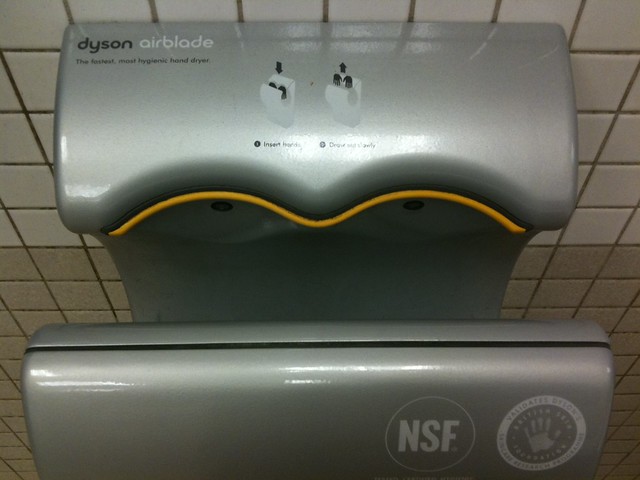
Ever use one of these Dyson Airblade hand dryers?

Even more striking than the design is the process.

Instead of "Rub hands vigorously under warm air," the process for traditional hand dryers (followed by the unwritten "Wipe hands on pants"), here's the process for a Dyson Airblade:

1. Insert hands
2. Draw out slowly

And how well does a Dyson work? Fantastically. By focusing warm air into a tiny sliver, the Dyson completely dries each part of your hand that passes through it.

Slow and focused beats vigorous and unfocused.


Now. What about your marketing? Could the same rules apply?

Think about what happens when a prospect comes into your business ...

Do you ask them qualifying questions, to gauge their interest and needs? Do you follow a script in the words you say or write to get the sale? And, most importantly, do you have a follow-up process to "touch" prospects at least 5-10 times after their initial contact with you?

In other words, is your marketing a slow and focused process?

Or ... do you wing it from start to finish -- sending emails and tweets, making phone calls, and following up whenever you have the time?

In other words, is your marketing a vigorous and unfocused mess?

Just like using a Dyson Airblade for the first time, it feels strange to put your prospects through a slow and focused process: qualifying questions, scripted presentations, disciplined/automated follow-up, etc.

But here's the good news: The "slow" method of drawing prospects through a focused marketing process will convert more of them into paying clients than a similar amount of vigorous, unfocused activity.

And you won't have to wipe your hands on your pants.

Bio: Kevin Donlin can help you grow your business and enjoy the breakthrough results your hard work deserves. If you're interested in boosting your revenues and profits, please click here.

Wednesday, April 18, 2012

How to Turn Relationships into Sales

If you know the 80/20 Rule (aka the Pareto principle), you know that a minority of causes usually leads to a majority of results.

In other words, only a few things matter. Most things don't.

The 80/20 Rule is a spooky natural law that doesn’t make any logical sense:
  • about 20% of clouds produce about 80% of rain ...
  • 20% of U.S. states produce 80% of home foreclosures, and ...
  • you wear 20% of your shirts 80% of the time (especially if you're a man!) ...
  • and on and on it goes.

My corollary on that idea, 80/20 Marketing, holds that only a few things matter in your marketing. Most things don't.

In any business, including yours, about:
  • 80% of sales come from 20% of products or services
  • 80% of complaints come from 20% of clients
  • 80% of profits come from 20% of marketing activities

That last figure is important.

Because, if 20% of your marketing produces 80% of your profits, then 80% of your marketing is largely a waste of time and money.

Most of your marketing doesn't matter.

Want to know one area that DOES matter? A "20% area" of high leverage and high profit?

That vital area of your marketing is conversion.

Conversion is everything you do to convert browsers into buyers and relationships into sales.

If you've taken the time and money to initiate a relationship with someone who can either become a client or refer a client, you need to take that relationship as far as you can, as fast as you can.

In other words, do everything possible to turn leads into customers.

And, one of the easiest and most effective ways to convert more leads is to mail them thank-you notes.

It's so effective, it can make your business entirely referral-driven in a matter of months.

That's according to Tom Hopkins in the book, Mastering the World of Selling. He writes:

Because I understood that building relationships is what selling is all about, I began early in my career to send thank you notes to people. I set a goal to send ten thank you notes every day. That goal meant that I had to meet and get the names of at least ten people every day. I sent thank you notes to people I met briefly, people I showed properties to, people I talked with on the telephone, and people I actually helped to own new homes. I became a thank you note fool. And guess what happened? By the end of my third year in sales, my business was 100% referrals! The people I had expressed gratitude to were happy to send me new clients as a reward for making them feel appreciated and important.

Even better, Hopkins gives you 10 pre-written examples of thank-you notes to send. If you can't use at least 5 of the examples below today, you need to rethink your business:

1. Telephone contact
Thank you for talking with me on the telephone. In today's business world, time is precious. You can rest assured that I will always be respectful of the time you invest as we discuss the possibility of a mutually beneficial business relationship.

2. In Person Contact
Thank you. It was a pleasure meeting you, and my thank you is for the time we shared. We have been fortunate to serve many happy clients, and it is my wish to some day be able to serve you. If you have any questions, please don't hesitate to call.

3. After Demonstration or Presentation
Thank you for giving me the opportunity to discuss with you our association for the mutual benefit of our firms. We believe that quality, blended with excellent service, is the foundation for a successful business.

4. After Purchase
Thank you for giving me the opportunity to offer you our finest service. We are confident that you will be happy with this investment towards future growth. My goal is now to offer excellent follow-up service so you will have no reservations about referring others to me who have similar needs as yours.

5. For a Referral
Thank you for your kind referral. You may rest assured that anyone you refer to me will receive the highest degree of professional service possible.

6. After Final Refusal
Thank you for taking your time to consider letting me serve you. It is with sincere regrets that your immediate plans do not include making the investment at this time. However, if you need further information or have any questions, please feel free to call. I will keep you posted on new developments and changes that may benefit you.

7. After They Buy From Someone Else
Thank you for taking your time to analyze my services. I regret being unable, at this time, to prove to you the benefits we have to offer. We keep constantly informed of new developments and changes, so I will keep in touch with the hope that in the years ahead we will be able to do business.

8. After They Buy From Someone Else, But Offer to Give You Referrals
Thank you for your gracious offer of giving me referrals. As we discussed, I am enclosing three of my business cards. I thank you in advance for placing them in the hands of three of your friends, acquaintances, or relatives that I might serve. I will keep in touch and be willing to render my services as needed.

9. To Anyone Who Gives You Service
Thank you. It is gratifying to meet someone dedicated to doing a good job. Your efforts are sincerely appreciated. If my company or I can serve you in any way, please don't hesitate to call.

10. Anniversary Thank You
Thank you. It is with warm regards that I send this note to say hello and again, thanks for your past patronage. We are continually changing and improving our products and services. If you would like an update on our latest advancements, please give me a call.
There you have it.

Instead of struggling to forge relationships with new prospects every day, why not make the most of the relationships you already have?

There's nothing to download, no new skills to master, and it takes about 20 minutes a day.

"The power of expressed gratitude is immense," according to Tom Hopkins. And he's right.

Why not put the power of this simple sales tool -- thank-you notes -- to work for you? It's a proven way to build your business by converting more relationships into sales, using high-value, 80/20 Marketing.

Bio: Kevin Donlin can help you grow your business and enjoy the breakthrough results your hard work deserves. If you're interested in boosting your revenues and profits, please click here.
Friday, April 13, 2012

Perfect Enemies: Why a Little Better is a Lot Better Than Not Better

You've heard it said that the perfect is the enemy of the good.

But it's worse than that ...

The perfect is the enemy of the better, and it's also the enemy of improvement.

Why?

Because, when we fret and fume over why something isn't yet perfect -- and probably never will be -- it's depressing as hell.

And depressed people don't take action to make things better. Depressed people watch TV, check Facebook, or drink coffee/beer/martinis.

So, just for the rest of today, screw perfection.

It may be the most productive thing you do all week.

Here's why: A little better is a lot better than not better.


Let's unpack that idea ...


1) "A little better is ..." making one small improvement to whatever you're doing. One small change for the better. One. Small. Improvement.

The fun part is, you may not stop at one. You may find that improving your marketing emails, customer support, blog, web site, or prospect follow-up is so enjoyable that you keep going until you create a wholesale makeover.

But you can't finish what you don't start. And starting is the hard part. So make your start small, with the goal of simply trying for a little better.


2) "... a lot better than not better" is the other side of that equation.

If the daunting goal of perfection has kept you from starting, guess what? You won't start. You won't improve.

That article you need to write, PowerPoint you have to create, or proposal you must submit won't happen by itself. Taking no action can NOT make anything better.

That's how the perfect really is the enemy of the better.

And that's why a little better is a lot better than not better.

Bio: Kevin Donlin can help you grow your business and enjoy the breakthrough results your hard work deserves. If you're interested in boosting your revenues and profits, please click here.

Tuesday, April 10, 2012

Best Buy CEO Resigns. If You Sell a Commodity, You Face a Future Like His

Kevin Donlin on Fox News

Click my goofy-looking face to watch my interview on Fox 9 News.

Best Buy CEO Brian Dunn resigned today, and the future of his company is cloudy.

Best Buy can survive, but they have to morph into a stronger combination of online and retail stores, selling products and services. They're in a very tough industry with a lot of problems. But they’re also a very rich company, with a lot of assets.

One of those assets could turn out to be the key to their future: it’s the Geek Squad. The Geek Squad is the world's largest tech-support operation, and by most accounts, it produces a very big part of Best Buy profits.

The founder of the Geek Squad, Robert Stephens, always maintained that he acquired Best Buy 10 years ago, and not the other way around. And he might have been right.

He also recognized something very important: Service cannot be commoditized. You cannot price shop on service the way you can price shop on TVs and washing machines.

If Best Buy can find a way to deliver more services, whether it’s to consumers, or businesses, or both, that could go a long way toward turning them around.

Besides Wal-Mart offline and Amazon online, Best Buy has to worry about Apple.

There are Apple products, like the iPad, which is threatening to replace laptops, DVD players, and TVs for a lot of people and that really hurts Best Buy, which sells all those devices.

On top of that, visiting an Apple Store is a wonderful experience, while visiting a Best Buy store is ... not.

If Best Buy wants more shoppers buying more products and services in their retail stores, they need create a shopping experience that's more memorable -- for all the right reasons.

And that’s going to be a big challenge for Best Buy.

Bottom line: If you want more revenues, more profits, and less competition, you want to de-commoditize the products you sell and create an experience for your clients.

Update: Check out this July 5 story in The Wall Street Journal to see how Best Buy is trying to deliver the high-profit shopping experience of Apple, which I suggested above.

Do Best Buy executives read my blog? Hell no. But a good idea is a good idea.

Will it work? Time will tell ...

One more thing: I just created a new Cheat Sheet that reveals 4 ways to "force" Amazon to build your business, at NO cost. Click To Download Now

Tuesday, March 27, 2012

How to Create a Permanent Business Asset

Here's a marketing lesson you'll want to devour, from a Wall Street Journal story about a popular San Fransisco deli ...


The owners of Wise Sons Jewish Delicatessen started their business with a dream: to bring traditional Jewish foods such as hand-sliced pastrami and house-smoked trout, to San Francisco.

But the economics of opening a location—costs can range between $300,000 and $500,000 for a 1,500-square-foot space with a liquor license in San Francisco—pushed the young restaurateurs to launch with a more temporary approach: the pop-up.

Pop-up restaurants [are] temporary eateries that set up shop for a few days, weeks or months in spaces such as hotel lobbies or other restaurants that close for the night.

Start up costs: About $2,000 to $2,500 a week, which covered rental space in a commissary kitchen, ingredients, and liability insurance, and was equivalent to what the partners, who worked without pay, earned during each service.

The Wise Sons pop-up soon began gathering crowds and garnering attention in the local press. In late February, just over a year since starting the pop-up, which still operates once a week, the partners opened a fixed location in the city's Mission District.

The obvious lesson? If your idea is good and you work hard, you can turn humble origins into grand success.

But there's another, more-important lesson buried in the story ...

Pop-ups also appeal to established restaurateurs such as Bill Chait, managing partner of Sprout LA, which operates six Los Angeles restaurants.

Pop-ups are an ideal way to reach a younger audience, he said. For Mr. Chait, who was already paying for the location and some of the staff salaries, input costs were minimal, and he made a margin of about 20% on each event, he said.

"The circle of people we have in this universe, it's our target market. It's social-media driven and younger," Mr. Chait said. A mailing list of more than 4,000 names accrued through the pop-ups "are big diners at our restaurants" now, Mr. Chait said.
Get that?

Chait used his temporary restaurants to build a permanent asset -- a mailing list of more than 4,000 customers. And they're coming back to dine at his permanent restaurants.

Chait is the only restaurateur in the article to mention a mailing list. My guess is Chait will be the only one in business 5 years hence -- because he's the only one building a permanent foundation.

A mailing list and/or customer database is the most valuable asset you can own. It's a rock upon which you can build a business that lasts.


You may have 1,000 followers on Twitter, but Twitter owns them -- not you.

You may have 1,000 friends on Facebook, but Facebook owns them -- not you.

If you don't have a customer database or mailing list, any success you have now is temporary. In the long run, you will get owned -- by the competition.

Bio: Kevin Donlin can help you grow your business and enjoy the breakthrough results your hard work deserves. If you're interested in boosting your revenues and profits, please click here.

Monday, March 26, 2012

What Can You Leave Out?

Psychologists Sheena Iyengar and Mark Lepper were among the first to show that too many choices are bad for sales.
"... when shoppers are given the option of choosing among smaller and larger assortments of jam, they show more interest in the larger assortment. But when it comes time to pick just one, they're 10 times more likely to make a purchase if they choose among six rather than among 24 flavors of jam."
The pair found the same "paradox of choices" applied when consumers were asked to choose a 401(k) retirement program.
"With 401(k)s, people are given enormous incentives to participate through tax shelters and employer matches," Iyengar comments. "So, essentially, if you choose not to participate, you're throwing away free money."

Instead of leading to more thoughtful choosing, however, more options led people to act like the jam buyers: When given two choices, 75 percent participated, but when given 59 choices, only 60 percent did. In addition, the greater the number of options, the more cautious people were with their investment strategies, the team found.
But wait. There's more ...

Blogger Derek Sivers writes:
Surgeon Atul Gawande found that 65% of people surveyed said if they were to get cancer, they'd want to choose their own treatment. Among people surveyed who really do have cancer, only 12% of patients want to choose their own treatment.

So, if you ask your customers if they want extensive choice, they will say they do -- but they really don't.

Bottom line: Simple is good. Because choosing is a chore.

Corollary: Do the thinking for your prospects. Make it simple for them to make the right choice. They will reward you by giving you money.

When it comes to "doing the thinking for your prospects," here's Exhibit A ...


... and here's Exhibit  B ...


What could Google and Apple have included on their websites? A lot.

What did they leave out? A LOT.

Know this: It took a lot of thinking for Google and Apple to determine the main things they want you to do ... so they could avoid distracting you with trivial choices.

Google wants you to search. Everything else is trivial.

Apple wants you to explore their new iPad. Everything else is trivial.

Now. What's the main thing you want prospects to do:
  • on your website? 
  • with your business card? 
  • when you engage them in a networking conversation?
Once you know what you want people to do, you can do something wonderful: Make things simple.

How do you do this?

By leaving out the trivial choices that don't matter.

Bio: Kevin Donlin can help you grow your business and enjoy the breakthrough results your hard work deserves. If you're interested in boosting your revenues and profits, please click here.